
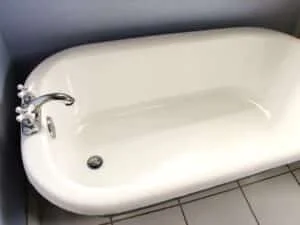
Fiberglass tubs crack for four main reasons: age and UV exposure making the material brittle, a lack of solid support underneath the tub, impact from a dropped object or heavy weight, and a thin fiberglass layer left over from the original installation. Age and support issues are the two we see most often, and they're also the two most likely to cause a crack to come back even after it's been patched. Knowing which one caused your crack changes whether a simple repair will hold or whether professional bathtub refinishing is the better long-term fix.
Key Takeaways
- Fiberglass gets more brittle every year, which is why older tubs crack from impacts that wouldn't have damaged them a decade ago.
- A tub that flexes or feels soft underfoot almost always means the support underneath has failed, not that the fiberglass itself is defective.
- A single dropped object rarely cracks a tub on its own. It's usually the final straw on a surface already weakened by age or flex.
- Some tubs are more crack-prone from day one because of a thin fiberglass laminate used during manufacturing or installation.
- A repaired crack that keeps reopening in the exact same spot is a sign the underlying cause was never actually fixed.
What's Causing Your Crack?
| Cause | Preventable? | When to Call a Pro |
|---|---|---|
| Age and UV exposure | Partly, with proper care | The tub shows multiple cracks or widespread brittleness |
| Lack of support underneath | Not once installed, but detectable early | The tub floor flexes or feels soft when you step in |
| Impact or heavy weight | Yes, with normal care | A crack forms from a single hard impact |
| Thin original fiberglass layer | No, it's a manufacturing factor | Cracks keep forming in new spots on a newer tub |
1. Age and UV Exposure
This is the most common cause we run into on tubs that are ten years or older. Fiberglass resin breaks down slowly over time, and the resin becomes more rigid and less able to flex without cracking. A tub near a window that gets direct sunlight breaks down even faster, since UV rays speed up the same brittleness that age causes on its own.
Why Does an Old Fiberglass Tub Crack More Easily?
A newer fiberglass tub has enough flex left in the resin to absorb everyday impacts without damage. As the resin ages and stiffens, that same impact has nowhere to go, so it cracks the surface instead of flexing around it. This is also why cracks tend to show up in clusters on older tubs rather than as a single isolated spot.
As The Spruce's rundown of the best bathtub materials notes, fiberglass has a shorter expected lifespan than materials like cast iron or acrylic largely because of this gradual loss of flexibility.
Call a pro if: you're seeing more than one crack, or the surface feels brittle and chalky across the whole tub rather than just around the damage. At that point, patching individual cracks is a losing game against a tub that's cracking everywhere at once.
2. Lack of Support Underneath the Tub
A fiberglass tub is meant to sit on a solid, continuous base, whether that's mortar, foam, or a properly built subfloor. When that support settles, shifts, or was never fully filled in during installation, the tub floor has to bear weight without anything solid underneath it.
Why Does a Fiberglass Tub Crack Under Your Feet?
Every time you step into the tub, your weight pushes the fiberglass down toward the gap in the support. Fiberglass isn't designed to flex like that repeatedly, so a crack eventually forms right at the point of the most movement, usually near the center of the tub floor. This is one of the few crack causes where the same spot keeps reopening no matter how well the crack itself is patched, because the actual problem is underneath, not on the surface. A failed support base can also let water sit against the underside of the tub once a crack does form, which is one of the more common paths to a leak.
Our guide, How Do You Fix a Leaking Fiberglass Tub? 5 Causes and Repair Steps, covers what to do once water is involved.
Call a pro if: the tub floor visibly flexes, gives, or feels soft when you step in. This isn't a surface repair. It usually means accessing the tub from underneath to rebuild the support before any crack repair will hold long-term.
3. Impact and Heavy Weight
A dropped bottle, a hard step, or a heavy object like a toolbox set down too fast can crack a fiberglass tub on its own, but it's less common than the other three causes on a tub that's otherwise in good shape. Impact damage usually shows up as a single crack right at the point of contact rather than spreading across the whole surface.
If a single impact is behind your crack, our master guide, Can a Cracked Fiberglass Tub Be Repaired? 6 DIY Fixes That Actually Last, walks through the repair steps for exactly this kind of damage.
Why Does a Fiberglass Tub Crack From a Dropped Object?
Fiberglass has a limited amount of give before it fails, and a hard, concentrated impact, especially on a corner or edge, exceeds that limit faster than a distributed weight like a person standing would. It's also more likely to cause a crack if the tub is already somewhat brittle from age, which is why the same impact might crack an older tub and barely mark a newer one.
Call a pro if: the impact was hard enough to crack all the way through, not just chip the surface. A through-crack is more likely to develop into a leak over time, even if it looks small right after it happens.
4. Thin Original Fiberglass Layer
Not every fiberglass tub is built the same way. Some manufacturers and installers use a thinner fiberglass laminate than others, which makes the tub more prone to cracking from day one, regardless of how carefully it's used or cared for.
Why Does a New Fiberglass Tub Crack So Soon?
If a tub that's only a few years old is already cracking without any obvious impact or support issue, a thin original fiberglass layer is one of the more likely explanations. This isn't something you can fix after the fact. It's a manufacturing and installation factor that shows up as the tub gets normal daily use.
As Angi's guide to the best bathtub materials points out, laminate thickness varies a lot between manufacturers, which is part of why two fiberglass tubs of the same age can hold up very differently.
Call a pro if: you're seeing new cracks form in different spots on a tub that's less than five years old. A professional can tell you whether a full refinish, which adds a durable protective layer over the original fiberglass, is worth doing now before more cracks show up, or if the damage has gone far enough that our guide, How Do You Know When a Cracked Fiberglass Tub Needs Replacing Instead? 6 Warning Signs, is the better read.
Fixing the Crack Without Fixing the Cause Doesn't Last
A crack repair only holds as long as the reason behind the crack is actually addressed. Patch a crack caused by a lack of support, and it will come back in the same spot. Refinish a tub that's brittle from age, and the new coating buys you real time, but it doesn't reverse the aging process underneath. Knowing which of these four causes applies to your tub is the difference between a repair that lasts for years and one you'll be redoing every few months.
Fort Worth Refinishing inspects the tub, not just the crack, so you know whether you're dealing with a quick patch or something that needs more attention. Contact us today or give us a call to schedule your free estimate, and we'll tell you exactly what's behind the damage.
Frequently Asked Questions
How old does a fiberglass tub need to be before cracking becomes a bigger concern?
There's no hard cutoff, but our rule of thumb from the field is that tubs past the 10 to 15 year mark start showing age-related brittleness more often, especially if they've had regular sun exposure.
Can I prevent my fiberglass tub from cracking as it gets older?
Avoiding harsh chemical cleaners, not standing heavy objects on the tub floor, and addressing any flex or soft spots early all help. You can't stop the fiberglass from aging, but you can slow down how quickly it becomes brittle.
Is a cracked fiberglass tub always a sign of a bigger problem?
Not always. A single crack from a dropped object on an otherwise solid tub is usually just that: an isolated impact. Multiple cracks, a crack that keeps reopening, or any flex in the tub floor are the signs that point to something more than surface damage.
How can I tell if my tub's support underneath has failed?
The clearest sign is the tub floor flexing or feeling soft when you step in, especially near the center. Some homeowners also notice a hollow sound when tapping the tub floor compared to the edges.
Does a fiberglass tub crack more easily in a bathroom that gets a lot of sunlight?
Yes. UV exposure speeds up the same brittleness that happens naturally with age, so a tub near a sunny window tends to show cracking sooner than one in a shaded bathroom.
Can a professional tell me which of these causes is behind my crack?
Yes, and it's one of the most useful parts of an in-person inspection. Our rule of thumb from the field is that the location and pattern of the crack, one isolated spot versus a spreading pattern, tells us most of what we need to know before we even touch the tub.
If my tub has a thin fiberglass layer, is a full refinish worth it?
Often, yes. A professional refinish adds a new, durable coating over the original fiberglass, which gives a naturally thinner tub a stronger outer layer than it started with. It's one of our most common recommendations for newer tubs that are already cracking.
Will a heavier person cause a fiberglass tub to crack faster?
Normal body weight, even for larger individuals, is well within what a properly supported fiberglass tub is built to handle. It's concentrated impact, like a hard step or a dropped object, and a lack of support underneath that cause most of the cracks we see, not everyday use.
Should I be worried if I see a crack forming on a tub I just had installed?
Yes, that's worth a call sooner rather than later. A crack on a newly installed tub usually points to either a support issue during installation or a thin original fiberglass layer, and both are worth addressing before the tub sees years of regular use.