

Yes, a cracked fiberglass tub can be repaired in most cases. Small to medium cracks, chips, and surface damage can be fixed with a fiberglass repair kit: clean the area, sand it, fill the crack with resin, and seal it with a matching gel coat. Done correctly, the patch typically holds for years. Larger cracks that run through the tub's structural layer, cracks near the drain, or a tub that flexes underfoot are a different story. Those usually need professional bathtub refinishing, not a patch job, because the damage goes deeper than the surface.
Key Takeaways
- Hairline cracks and small chips are DIY-fixable with a fiberglass repair kit (resin, hardener, and gel coat).
- A properly done crack repair holds for several years, not just a few months, if the surface is fully cleaned and sanded before patching.
- A crack that keeps reopening in the same spot usually points to a support or base issue underneath the tub, not just surface damage.
- A tub that flexes or "gives" when you step into it needs more than a patch: that's a structural warning sign.
- Leaks are a separate problem from cracks. If water is reaching the subfloor, that's a repair job for a professional, not a DIY kit.
- A professional refinish repairs the crack and reseals the entire tub surface, which protects against new cracks forming in the same weak spot.
DIY-Safe vs. Call-a-Pro at a Glance
| Damage Type | DIY-Safe? | Call a Pro When... |
|---|---|---|
| Hairline crack or small chip | Yes, with a repair kit | The crack reopens after patching or runs through to the backing layer |
| Leak | Sometimes, if it's surface-level | Water has reached the subfloor, ceiling, or plumbing seal |
| Scratches and scuffs | Yes | The scratch is deep enough to catch a fingernail |
| Dullness or discoloration (small area) | Yes | Dullness or yellowing covers the entire tub |
| Flexing or a soft spot underfoot | No | Any time the tub gives or flexes when you step in |
1. Cracks and Chips in a Fiberglass Tub
This is the most common fiberglass tub issue we get called for. A crack usually starts as a thin hairline near the tub floor, where most of the weight and impact lands, and it can spread into a small spiderweb pattern if it's ignored. Chips tend to show up along the rim or where something heavy has been dropped.
The most likely cause is age combined with impact: fiberglass gets more brittle over time, and a dropped bottle or a hard step can crack a spot that would have flexed and held up fine a few years earlier. A thin fiberglass layer from the original manufacturing can also make a tub more crack-prone than others.
For a closer look at what causes these cracks in the first place, see our guide: Why Do Fiberglass Tubs Crack in the First Place? 4 Causes Behind the Damage.
How to Fix a Cracked Fiberglass Tub Yourself
- Clean the cracked area with mild detergent and water, then wipe it down with rubbing alcohol so the resin has a clean surface to bond to.
- Sand the crack and the surrounding area with 120-grit sandpaper to rough up the surface and, if the crack is deep, widen it slightly so the filler can seat properly.
- Mix the resin and hardener from a fiberglass repair kit and apply it with a putty knife, slightly overfilling the crack so it doesn't sink as it cures.
- Let it cure fully (usually about 24 hours), then sand it smooth with 400-grit sandpaper, blending the patch into the surrounding surface.
- Apply a matching gel coat with a brush or roller if the color needs to match, then let it dry completely before using the tub.
- Polish the repaired area with a polishing compound in small circular motions to bring back the shine and blend the patch in.
Call a pro if: the crack runs all the way through to the backing material, you see more than one crack forming, or a crack you've already patched keeps reopening. That's usually a sign the tub needs a full refinish rather than another spot repair.
If you're weighing repair against replacement, see our guide: How Do You Know When a Cracked Fiberglass Tub Needs Replacing Instead? 6 Warning Signs.
2. Leaking Fiberglass Tub
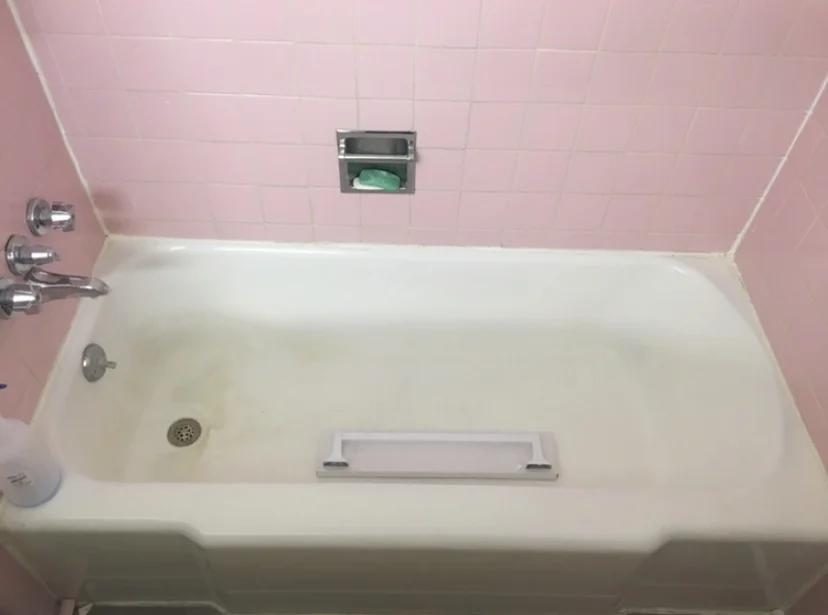
A leak is a different problem from a crack, even though the two are often related. You'll usually notice it as water pooling around the base of the tub, a stain on the ceiling in the room below, or a musty smell that won't go away no matter how much you clean.
Most leaks trace back to a crack that has gone all the way through the gel coat into the structural layer underneath, letting water seep through with every use. Failed caulking around the tub edge or a worn drain seal can cause the same symptoms without any visible crack at all, which is why it's easy to misdiagnose.
How to Fix a Leaking Fiberglass Tub
Start by drying the area completely and running water while you check the tub, the drain, and the caulk line for the actual source. If it's a surface crack, a fiberglass repair kit can seal it the same way as the crack repair above. If the leak traces back to the drain seal or plumbing behind the tub, that's a job for a plumber, not a repair kit.
Call a pro if: the leak keeps coming back after you've patched it, or you can already see water damage on the subfloor or the ceiling below. At that point, you're dealing with more than a surface patch, and waiting only lets the damage spread.
For a full breakdown of all five common leak sources, see our guide: How Do You Fix a Leaking Fiberglass Tub? 5 Causes and Repair Steps.
3. Scratches and Scuffs
Scratches show up as thin lines or dull streaks across the tub surface, usually from abrasive cleaners, metal objects like razors or jewelry, or bath mats with suction cups that rub against the finish over time.
Fiberglass is softer than porcelain or acrylic, so it scratches more easily and needs gentler care to avoid this in the first place.
As Angi's comparison of acrylic and fiberglass tubs explains, fiberglass sits lower on the durability scale than acrylic, which is exactly why it picks up scuffs that an acrylic tub would shrug off.
How to Remove Scratches From a Fiberglass Tub
Clean the scratched area with mild soap and water, then lightly sand it with fine-grit sandpaper. Apply a small amount of fiberglass repair compound to the sanded area, let it dry, then buff it out with a polishing compound until it blends with the surrounding surface.
Call a pro if: the scratch is deep enough to catch a fingernail. At that depth, sanding it out yourself risks thinning the surface too much in one spot.
4. Dullness and Discoloration
A fiberglass tub that's lost its shine usually looks yellowed, faded, or slightly chalky to the touch. This is typically from UV exposure near a window, years of harsh chemical cleaners stripping the finish, or simple age.
As This Old House's guide to installing a fiberglass tub and surround shows, the gel coat is a thin protective layer bonded over the structural shell, and it's this outer layer that fades and yellows first as it ages.
How to Restore Shine to a Dull Fiberglass Tub
For a small dull patch, a polishing compound applied with a soft cloth in small circular motions can bring back a noticeable amount of shine. For discoloration that's gone below the surface, a fresh gel coat over the affected area restores both the color and the shine at the same time.
Call a pro if: the dullness or yellowing covers the whole tub rather than one patch. At that point, a full refinish gives a more even, longer-lasting result than trying to spot-treat it.
Don't Let a Small Crack Turn Into a Big Repair
Most fiberglass tub damage, cracks, chips, scratches, and dull spots, can be repaired without replacing the whole tub, and a properly done repair can hold up for years. The exceptions are cracks that keep coming back, leaks that have reached the subfloor, and any tub that flexes underfoot. Those point to damage below the surface, and patching over them just delays a bigger repair.
Fort Worth Refinishing repairs and refinishes fiberglass tubs across the DFW metroplex, and we can tell you within a few minutes on-site whether your tub is a patch job or needs a full refinish. Contact us today or give us a call to schedule your free estimate, and we'll get your tub looking and holding up like new.
Frequently Asked Questions
How much does it cost to repair a cracked fiberglass tub?
Pricing depends on the size of the crack and whether it's a spot repair or a full refinish.
How long does a fiberglass tub crack repair last?
A repair done with proper prep and a quality gel coat typically lasts several years under normal use. It's one of our most common follow-up questions, and our rule of thumb from the field is that the prep work matters more than the repair kit you use.
Can I use the tub right after a crack repair?
You'll want to let the resin and gel coat cure fully first, usually around 24 hours, before running water over the repaired area. Using it too soon is one of the most common reasons a DIY repair fails early.
What's the difference between a DIY repair kit and a professional refinish?
A repair kit patches the specific crack or chip. A professional refinish reseals the entire tub surface with a durable coating, which fixes the visible damage and protects the rest of the tub from developing the same issue later.
Why does my fiberglass tub keep cracking in the same spot?
This is usually a sign of a support issue underneath the tub rather than a problem with the patch itself. If the tub isn't fully supported at that point, the fiberglass flexes every time weight is on it, and no surface patch will hold against that for long.
Is a cracked fiberglass tub dangerous to use?
A small surface crack usually isn't a safety issue on its own, but sharp edges from a chip can cut skin, and a crack that's let water reach the structural layer can weaken the tub over time. We recommend not ignoring a crack near the drain or a spot that already feels soft.
Can a cracked fiberglass shower be repaired the same way as a tub?
Yes, the same repair kit process works for fiberglass shower walls and pans. Larger or more severe damage on a shower, especially near the pan or a seam, is better handled by a professional to avoid water getting behind the wall.
When is a crack too big to repair, and the tub needs replacing instead?
In our experience, a crack that's spread into multiple directions, one near the drain that keeps letting water through, or visible flexing in the tub floor are the signs that push a tub from "repairable" into "replace" territory.
Do fiberglass tubs crack more than acrylic or porcelain tubs?
Fiberglass is generally softer and more prone to scratching and cracking than acrylic or porcelain, especially as it ages. Proper care, avoiding abrasive cleaners and heavy impacts, goes a long way toward preventing cracks before they start.