
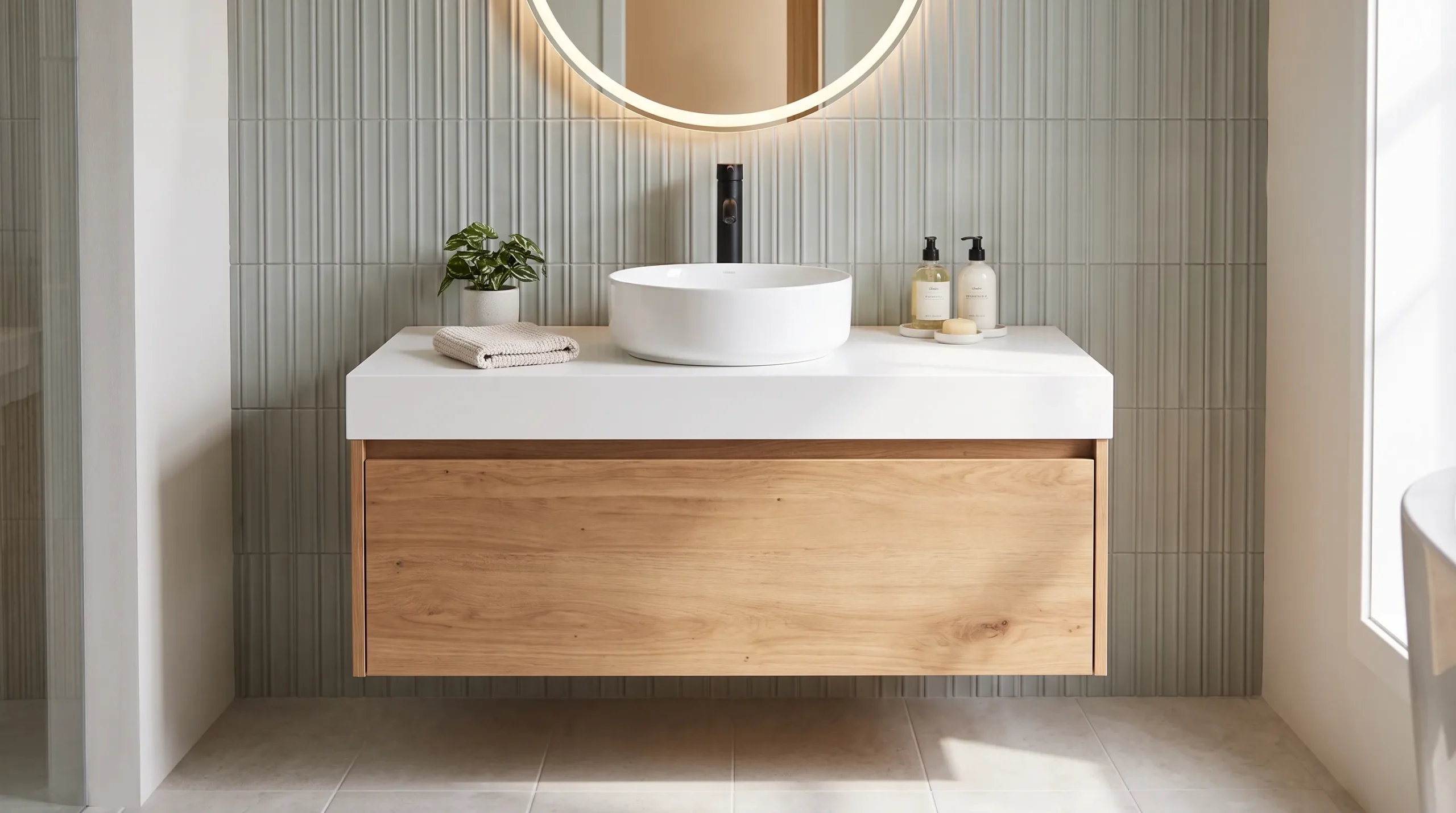
A vessel sink bathroom vanity cabinet should typically measure 28 to 30 inches tall before the sink is added, since the bowl itself adds another 4 to 6 inches once it's in place. Get this wrong, and you end up with a vanity that's several inches too tall for comfortable use, which is one of the most common mistakes we see with vessel sink installs. Four measurements determine whether the finished height actually works: cabinet height, bowl height, faucet reach, and the finished working height once everything is combined.
Key Takeaways
- Vessel sink cabinets are typically built 28 to 30 inches tall, shorter than a standard vanity, to compensate for the bowl added on top.
- The bowl itself adds 4 to 6 inches, depending on its shape and depth.
- Vessel sinks require a taller faucet than drop-in sinks, so the spout clears the bowl's rim comfortably.
- The finished working height (cabinet plus bowl) should land in a similar comfortable range as a standard or comfort-height vanity, usually 32 to 36 inches.
- Skipping any one of these four measurements is the most common reason vessel sink vanities end up too tall or too short.
- In Arlington, TX, we measure all four numbers together before ordering a vessel sink vanity, since changing any one after installation is a bigger job than it looks.
Vessel Sink Height Measurements at a Glance
| Measurement | Typical Range | Why It Matters |
| Cabinet height | 28 to 30 in | Compensates for the added bowl height |
| Bowl height | 4 to 6 in | Varies by bowl shape and depth |
| Faucet height and reach | Taller spout required | Must clear the bowl's rim comfortably |
| Finished working height | 32 to 36 in | Should feel similar to a standard or comfort-height sink |
1. Cabinet Height
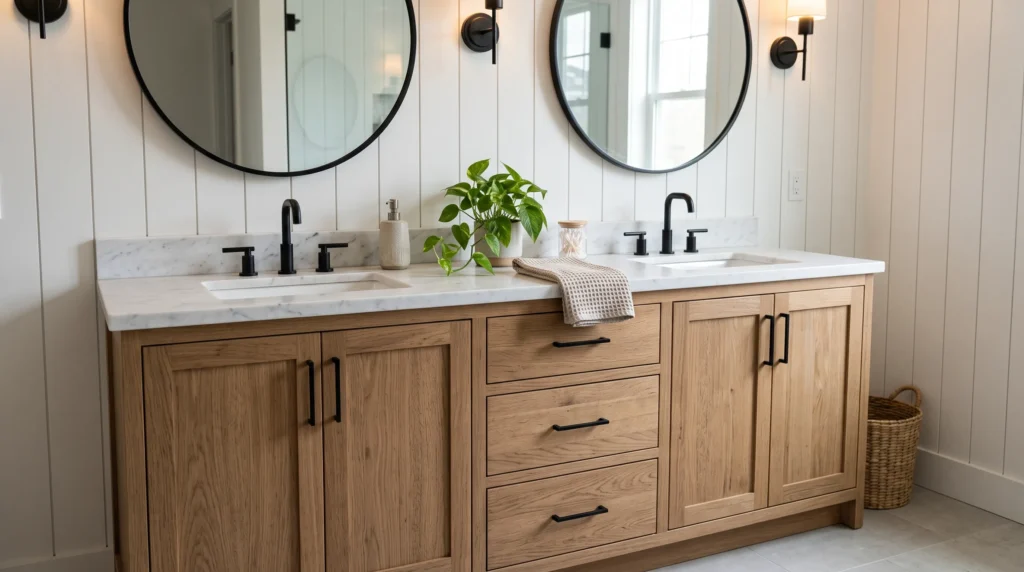
The cabinet is the foundation for every other measurement on this list. Most vessel sink cabinets are built in the 28 to 30 inch range, shorter than the 30 to 32 inch standard or 34 to 36 inch comfort-height vanity, precisely because the bowl adds height on top. If you order a full-height standard or comfort-height cabinet and add a vessel sink to it, the finished vanity is very likely to end up too tall.
Call a pro before ordering a cabinet if you already know you're installing a vessel sink, since the cabinet height needs to be selected with the bowl and faucet in mind, not chosen on its own.
How Cabinet Height Changes When You're Installing a Vessel Sink
A standard drop-in sink sits inside a cutout in the counter, so the counter height and sink height are essentially the same. A vessel sink sits entirely above the counter, which is why the cabinet underneath needs to be shorter to begin with.
For a full comparison of how vessel sink height stacks up against other vanity styles, see What Is the Standard Height of a Bathroom Vanity? 7 Heights Explained.
2. Bowl Height
Vessel sink bowls vary more in height than most people expect. A shallow, wide bowl might add only 4 inches, while a deeper, more sculptural bowl can add 6 inches or more. This is one of the most overlooked measurements, since two vessel sinks that look similar in photos can have noticeably different heights in person.
Before you finalize a bowl, confirm:
- The bowl's total height from base to rim
- Whether the bowl mounts flush to the counter or partially recesses into it
- How the bowl's height compares to others you're considering, since marketing photos don't always convey true scale
Call a pro if you're choosing between several vessel bowl styles and want help predicting the finished height before you order.
Why Vessel Sink Bowl Height Varies So Much Between Styles
Manufacturers design vessel bowls for visual impact as much as function, which means height isn't standardized the way it is for drop-in sinks. Round bowls, rectangular bowls, and sculptural glass bowls can all carry different heights even at a similar diameter. Comparing your comfort-height goals against the exact bowl you're considering avoids a mismatch after installation.
For how this fits into the bigger picture of vanity height decisions, see What Is a Comfort-Height Vanity? 5 Reasons Homeowners Are Switching.
3. Faucet Height and Reach
Vessel sinks need a taller faucet than a standard drop-in sink, since the spout has to clear the bowl's raised rim to direct water into the basin rather than against its edge. This detail catches a lot of homeowners off guard when they reuse a faucet from a previous, non-vessel installation.
Vessel sinks require taller faucets to accommodate their height, and getting this wrong is a common and avoidable mistake, as This Old House's guide to choosing a bathroom vanity notes when comparing sink and faucet styles.
Call a pro if you're pairing a new vessel sink with an existing faucet, since reach and height both need to clear the bowl without splashing.
How to Choose the Right Faucet Height for a Vessel Sink
Look for faucets specifically labeled for vessel sinks, since these are built with the added height already accounted for. As a rough guide, the faucet spout's clearance above the counter should sit taller than the bowl's rim by a few inches, so water lands well inside the basin rather than near the edge.
4. Finished Working Height
Once the cabinet, bowl, and faucet are combined, the finished working height is what actually determines whether the vanity feels comfortable to use every day. This is the number that matters most, since it's entirely possible for each individual measurement to look correct on paper while the combined result still ends up too tall or too short.
Aim for a finished height similar to whatever range works for your household, whether that's closer to standard height (30 to 32 inches) or comfort height (34 to 36 inches), and remember that plumbing rough-in height needs to match this final number, not just the cabinet height.
Call a pro to confirm the finished working height before plumbing is roughed in, since moving the water and drain lines after installation is far more expensive than adjusting the plan beforehand.
How to Avoid a Vessel Sink Vanity That Ends Up Too Tall
The most reliable way to avoid this mistake is to physically stack or mock up the cabinet height, bowl height, and faucet before ordering, rather than relying on separate spec sheets. Moisture and condensation around the base of the sink and cabinet are also worth planning for during installation, since insulating exposed pipes helps prevent the kind of buildup the EPA’s guide to mold and moisture control recommends addressing early.
If the finished vanity already sits too tall, see What Is the ADA-Compliant Bathroom Vanity Height? 6 Requirements to Know for guidance on clearance-driven fixes that can also help with vessel sink adjustments.
Get the Measurements Right Before You Order.

A vessel sink can be one of the most striking features in a bathroom remodel, or one of the most frustrating, depending entirely on whether these four measurements were checked together before anything was installed. Getting even one of them wrong, especially bowl height or faucet reach, means living with a sink that never quite feels right, or paying to fix it after the fact.
Fort Worth Refinishing helps Arlington, TX homeowners plan vessel sink installations from the cabinet up, confirming cabinet, bowl, faucet, and finished height together before you order anything. Contact us today or give us a call to request a free quote, and we'll help you avoid a costly mismatch.
Frequently Asked Questions
Do all vessel sinks need a special faucet?
Yes, in nearly every case. Our rule of thumb from the field is that a vessel sink needs a taller faucet designed for the added bowl height, or water won't land properly in the basin.
Can I use my existing standard-height vanity with a vessel sink?
Sometimes, but it depends on the vanity's current height. This is one of our most common consultation requests, since a full-height standard or comfort-height cabinet is often too tall once a vessel bowl is added on top.
How much height does a vessel sink bowl typically add?
It varies more than most people expect, usually 4 to 6 inches, depending on the bowl's shape and depth. We always confirm the exact bowl height before finalizing cabinet plans.
What happens if my vessel sink vanity ends up too tall?
In our experience, the fix is usually a lower-profile bowl or trimming the cabinet base, rather than replacing the entire vanity. A licensed installer can confirm which option fits your specific setup.
Is it harder to install a vessel sink than a standard drop-in sink?
Generally, yes, mainly because of the extra coordination between cabinet height, bowl height, and faucet reach. Plumbing connections also sometimes need adjustment to match the shorter cabinet.
Do vessel sink vanities cost more than standard vanities?
Often, yes, due to the specialized faucet and the additional planning involved in getting the height right. Because costs vary by bathroom, we recommend a free in-home estimate for an accurate number.
Can I pair a vessel sink with a comfort-height vanity?
Yes, but the cabinet needs to be shorter than a typical comfort-height cabinet to compensate for the bowl, so the finished height still lands in a comfortable range.
What's the most common mistake homeowners make with vessel sink height?
In our experience, it's ordering a full-height cabinet without accounting for the bowl and faucet, which results in a vanity that's several inches too tall once everything is installed.
Should I measure the vessel sink height before or after choosing a faucet?
Ideally, both together. Faucet reach depends on bowl height, and bowl height affects the cabinet height you need, so treating them as separate decisions is what usually causes a mismatch.