
Knowing that reglazing exists is one thing. Knowing exactly when it is the right call, and when it is not, is where the real decision-making happens. Both tile reglazing and bathroom vanity refinishing have their place, but so does full replacement, and choosing the wrong option can lead to unnecessary cost and frustration.
For homeowners in Arlington, TX, the decision usually comes down to the condition of the bathroom surfaces and the type of wear they are dealing with. Light surface damage, dull finishes, or outdated colors are often good candidates for ceramic tile refinishing or vanity refinishing, since these methods restore appearance without demolition. However, issues like loose tiles, deep cracks, water damage, or structural concerns usually point toward full replacement instead.
Understanding What Each Option Actually Solves
Before deciding between reglazing and replacement, it helps to be clear on what each option is designed to address.
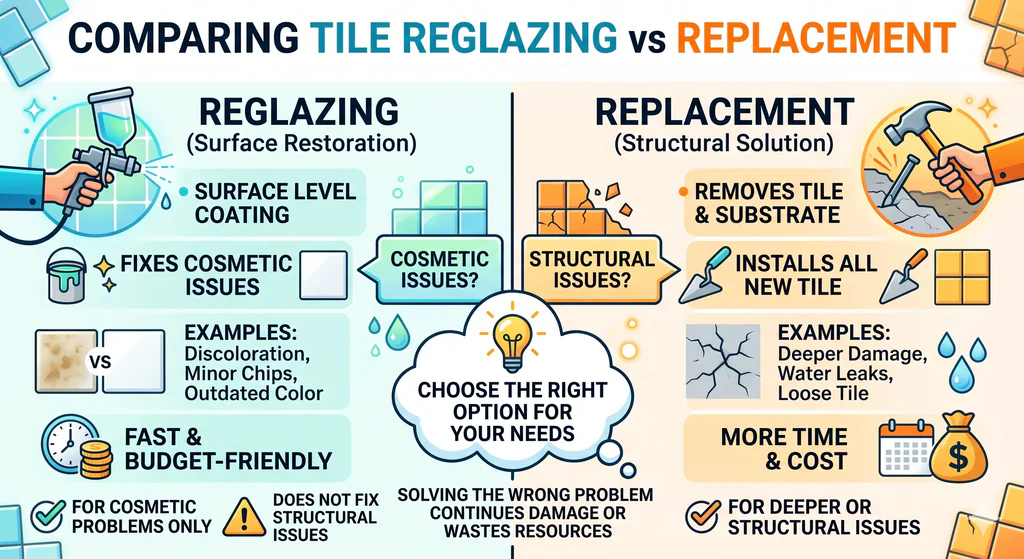
- Reglazing is a surface restoration process. It addresses cosmetic problems like discoloration, surface wear, minor chips, and outdated color by applying a new professional-grade coating over the existing tile.
- Replacement is a structural solution. It removes everything down to the substrate and installs entirely new tile, which makes it the appropriate choice when the problem goes deeper than the surface.
- Choosing reglazing for a structural problem will not solve the underlying issue and may mask it temporarily while the damage continues to worsen underneath.
- Choosing a replacement for a purely cosmetic problem means spending significantly more time and money than the situation actually requires.
- Getting this distinction right from the start is the most important part of the decision.
For a full overview of what reglazing involves and how the process works, our guide on Understanding Bathroom Tile Reglazing and How It Works covers every step in detail.
Clear Signs It Is Time to Reglaze Your Bathroom Tiles
Reglazing is the right choice when the issue is cosmetic, and the tile structure beneath is still solid. Here are the most reliable indicators that reglazing is appropriate.
The Tiles Look Worn but Feel Solid
- When you press on the tiles, they do not shift, flex, or feel hollow.
- The tiles are firmly attached to the wall or floor with no signs of lifting at the edges.
- The grout between the tiles is intact, even if it is stained or discolored.
- There are no soft spots or areas where the tile feels like it is separating from the substrate beneath it.
The Surface Has Cosmetic Issues That Cleaning Cannot Fix
- Persistent discoloration, yellowing, or staining that remains after thorough cleaning is a strong indicator that a surface restoration is needed.
- Light surface scratches or minor chips that affect the appearance but not the structure of the tile are well-suited for reglazing repair.
- A dull or worn finish that no longer responds to cleaning products is a sign that the surface coating has degraded and needs to be renewed.
- Outdated tile color that no longer suits the homeowner’s preferences is one of the most common reasons to choose reglazing as a cost-effective refresh.
The Grout Is Stained, but the Tiles Are Intact
- Heavy grout discoloration that does not respond to grout cleaners or scrubbing is a common reglazing trigger.
- Since reglazing is applied over both the tile surface and the grout lines together, it resolves grout discoloration as part of the same process.
- This is particularly useful in older bathrooms where the grout color has shifted significantly from its original appearance.
If you’re comparing renovation options, read Is Bathroom Tile Reglazing Worth It? to help you choose confidently.
Signs It Is Time to Replace Your Bathroom Tiles
Replacement is necessary when the problem has moved beyond the surface. The following signs indicate that ceramic tile refinishing will not solve what is happening with your tiles.
The Tiles Are Cracked, Broken, or Structurally Damaged
- Cracks that run through the full thickness of the tile indicate structural failure that a surface coating cannot repair.
- Broken tiles with missing pieces expose the substrate beneath to moisture and need to be replaced rather than coated over.
- Multiple cracked tiles in the same area can indicate movement in the substrate or a deeper structural issue that must be addressed before any new surface work begins.
Tiles Are Loose, Hollow, or Coming Off the Wall
- Tapping a tile and hearing a hollow sound indicates the adhesive bond between the tile and the substrate has failed.
- Loose or shifting tiles allow moisture to get behind the surface, which accelerates damage and can lead to mold growth inside the wall.
- Tiles that are already coming loose or falling off need to be removed and the substrate assessed before any restoration work is considered.
There Is Evidence of Water Damage or Mold Behind the Surface
- Soft or spongy areas on the wall near the tiles suggest moisture has penetrated the substrate.
- Visible mold growth at the base of tiles or along grout lines that returns quickly after cleaning often indicates mold has established itself behind the wall.
- Water stains on adjacent walls or ceilings near the bathroom are a sign that tile failure has allowed water to travel into the structure of the home.
- In these situations, the tile must be removed so the water damage can be properly assessed and repaired before new tile is installed.
The EPA states that hidden moisture and mold growth behind building materials can occur even when surfaces appear intact, requiring removal of affected materials rather than surface treatment.
The Existing Tile Layout No Longer Works for the Space
- If a homeowner wants to change the size, format, or layout of the tiles as part of a broader bathroom redesign, reglazing cannot accommodate that.
- Full replacement is necessary when the goal is a new look that goes beyond restoring the current surface.
Full bathroom renovations that involve layout changes, demolition, or new installations typically extend the project timeline significantly, often ranging from 3 to 8 weeks depending on complexity.
Situations That Require a Professional Assessment
Some tile conditions are not clearly in either category and genuinely require a professional inspection before a decision can be made.
When You Are Not Sure How Deep the Damage Goes
- Surface cracks that appear minor may or may not extend through the full tile. A professional can assess whether the damage is cosmetic or structural.
- Areas with heavy staining near grout lines may indicate moisture intrusion beneath or may simply be surface buildup. Only a proper inspection can confirm which it is.
When Previous Repairs Have Been Made
- Tiles that have been patched, re-grouted, or repaired before may have inconsistent bonding across the surface.
- A professional technician can evaluate whether the existing surface is stable enough to hold a new coating or whether replacement is the more reliable path forward.
When the Bathroom Is Older and Has Never Been Restored
- Very old tile installations may have adhesive, grout, or substrate materials that behave differently from modern installations.
- A professional assessment ensures the reglazing process is appropriate for the specific materials and conditions in the space.
How to Inspect Your Tiles Before Calling a Professional
You do not need to be an expert to do a basic assessment of your tile condition. This simple check gives you useful information before scheduling a consultation.
The Tap Test
- Use your knuckle to tap each tile gently across the surface.
- A solid sound indicates the tile is firmly bonded to the substrate.
- A hollow or dull sound suggests the adhesive behind the tile has failed, and the tile is no longer properly attached.
The Press Test
- Apply light pressure to the center of each tile with your palm.
- A tile in good condition will not flex or move under gentle pressure.
- Any movement, shifting, or giving indicates a bonding issue that needs professional evaluation.
The Visual Inspection
- Look for cracks that run fully across the tile rather than just surface scratches.
- Check grout lines for gaps, crumbling, or areas where grout has come away entirely.
- Look along the base of the tub or shower for any discoloration or soft spots on the surrounding wall that could indicate moisture intrusion.
The Cleaning Test
- Clean the tiles thoroughly with a quality bathroom cleaner and assess what remains afterward.
- Staining or discoloration that persists after a thorough clean is a cosmetic issue well-suited for reglazing.
- Damage that is still present and unchanged after cleaning is structural and needs a professional look.
How Timing Affects Your Decision Between Reglazing and Replacement
The timing of when you address your tiles also plays a role in which option makes the most sense.
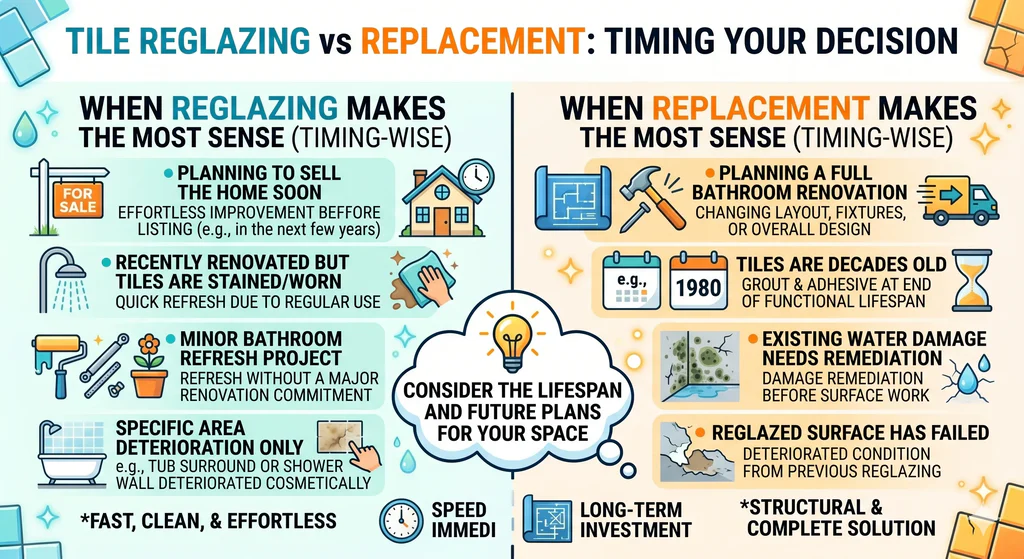
When Reglazing Makes the Most Sense Timing-Wise
- You are planning to sell the home within the next few years and want to improve bathroom's appearance efficiently before listing.
- The bathroom was recently renovated but the tiles have become stained or worn through regular use.
- You want to refresh the bathroom as part of a minor update without committing to a major renovation project.
- The tiles are in good condition overall but one specific area, such as the tub surround or shower wall, has deteriorated cosmetically.
When Replacement Makes the Most Sense Timing-Wise
- You are planning a full bathroom renovation that involves changing the layout, fixtures, or overall design of the space.
- The tiles have been in place for decades and the grout and adhesive are reaching the end of their functional lifespan.
- There is existing water damage that needs to be remediated before any surface restoration work begins.
- You have already reglazed the surface once before and the tile condition has deteriorated to the point where another coat is no longer the most practical solution.
Framework for Making the Final Reglazing vs Replacement Decision
If you have completed the inspection steps above and still want a quick reference to guide your final decision, use this straightforward framework.
Choose Reglazing If
- Tiles are solid, stable, and firmly attached with no hollow sounds when tapped.
- The problem is cosmetic, including discoloration, surface wear, minor chips, or outdated color.
- You want a faster turnaround and less disruption to your home and daily routine.
- The grout is stained but structurally intact and the tiles themselves are in good condition.
- You want to extend the life of your existing tiles before committing to a larger renovation.
Choose Replacement If
- Tiles are cracked, loose, hollow when tapped, or already coming off the wall.
- There is visible or suspected water damage, mold, or substrate failure behind the tiles.
- The goal is a full bathroom redesign that requires a new layout or tile format.
- Multiple previous repairs have left the surface in an inconsistent or unstable condition.
For a broader look at why so many homeowners in similar situations ultimately choose reglazing, our guide on Why Homeowners Choose Bathroom Tile Reglazing Over Replacement provides the full picture.
Know Your Tiles, Make the Right Move
The difference between reglazing and replacement is not just about preference or budget. It is about matching the solution to the actual condition of your tiles. When you take the time to inspect your bathroom properly and understand what each option is designed to solve, the right decision becomes much clearer. Most homeowners find that their tiles are in better structural shape than they assumed, which makes reglazing the smarter, more practical path forward.
Fort Worth Refinishing works with homeowners across Arlington, TX to assess tile conditions honestly and deliver professional reglazing results that last. If you are ready to find out whether your bathroom tiles are a good candidate for reglazing, contact us today or give us a call to schedule your consultation.
Frequently Asked Questions
coat. How do I tell the difference between a surface crack and a structural crack?
A surface crack is shallow and does not extend through the full thickness of the tile, while a structural crack runs all the way through. A professional inspection is the most reliable way to confirm which type you are dealing with.
What happens if I reglaze tiles that should have been replaced?
Reglazing over tiles with underlying structural issues or water damage will not solve the root problem. The damage will continue to develop beneath the coating, and the finish may fail sooner than expected as a result.
Is it possible to reglaze only the grout without touching the tiles?
Reglazing is typically applied over the entire surface, including both tiles and grout lines. Treating only the grout separately is a different process and would need to be discussed with a professional to determine the best approach.
How do I know if there is water damage behind my tiles without removing them?
Signs of water damage behind tiles include hollow sounds when tapped, soft or spongy wall areas near the tiles, persistent mold growth along grout lines, and water stains on adjacent walls or ceilings.
Can tiles that have minor chips be reglazed successfully?
Yes, minor chips and surface imperfections are repaired by the technician during the preparation stage before the coating is applied. The repair work is part of the standard professional reglazing process.
Does the age of my bathroom tiles affect whether reglazing is a good option?
Age alone does not disqualify tiles from reglazing. What matters most is the current structural condition of the tile, the substrate, and the adhesive. A professional inspection is the best way to assess suitability in older bathrooms.
Can reglazing be done on tiles in a bathroom that has ongoing ventilation problems?
Poor ventilation can affect how the coating cures and may shorten the lifespan of the finish over time. A technician can advise on whether ventilation improvements are recommended before or after the reglazing is completed.
Is there a minimum tile condition required before reglazing can be performed?
The tile must be structurally sound, firmly attached, and free of active water damage or mold behind the surface. Minor cosmetic imperfections are expected and are addressed during the preparation process.
What is the best way to get an honest assessment of whether my tiles need reglazing or replacement?
Schedule a professional inspection with a reputable reglazing technician who is willing to recommend replacement if that is genuinely the better option. A trustworthy professional will give you an honest evaluation rather than simply recommending the service they provide.