
You had your bathtub refinished, and it looked perfect. But lately, something feels off. Maybe the surface looks dull in certain spots. Maybe there is a small area that seems to be lifting. Maybe you noticed a stain that will not go away, no matter how much you clean it.
These are not random cosmetic issues. They are warning signs, and knowing what they mean is the difference between a quick professional touch-up and a full bathtub refinishing job that could have been avoided. The homeowners who catch these signs early almost always avoid the worst outcomes. This guide walks you through every warning sign to watch for, what each one means, and what steps to take when you spot them.
Why Refinishing Fails and What It Usually Looks Like

Bathtub refinishing does not fail overnight. It is a gradual process that starts small and becomes more visible over time. The coating begins to break down in response to specific stressors, and the early signs are often subtle enough that many homeowners miss them until the damage has already spread.
Understanding what drives coating failure makes it much easier to recognize the signs when they appear. The most common causes include improper surface preparation during the original job, exposure to harsh cleaning products, prolonged moisture contact, and physical damage from everyday use.
What Drives Early Coating Failure on a Refinished Tub
- Poor surface preparation during the original refinishing job weakened the coating bond from day one
- Consistent use of harsh chemical cleaners that gradually break down the coating on the surface
- Prolonged moisture exposure from poor ventilation or standing water left sitting on the surface
- Physical damage from abrasive tools, heavy objects, or improper accessories placed on the tub
If you want a complete picture of what a quality refinishing job should deliver and how long it should hold up, How Long Does Bathtub Refinishing Last? gives you the full lifespan breakdown and what to expect from a professional job done right.
Peeling and Flaking
Peeling is one of the most obvious and serious signs that a refinished tub coating is failing. When the coating begins to separate from the surface beneath it, it lifts at the edges and starts to peel away in layers. In early stages, peeling may appear as small lifted edges near the drain, along the walls of the tub, or at the waterline.
Peeling almost always indicates a bonding failure. This can happen because the surface was not properly prepared before the coating was applied, because moisture worked its way underneath the coating through a chip or crack, or because the coating has simply reached the end of its usable life.
What Peeling Looks Like at Each Stage
- Early stage: small lifted edges or bubbles appearing near seams, drains, or tub walls
- Mid stage: visible sections of coating curling away from the surface in larger patches
- Late stage: widespread flaking across multiple areas of the tub with exposed underlying material
Bubbling and Blistering
Bubbling beneath the tub surface is a clear sign that moisture or air has become trapped between the coating and the tub beneath it. The coating lifts slightly in rounded formations that feel soft or hollow when pressed. This is different from peeling in that the coating has not yet separated fully, but the bond has already been compromised.
Bubbling is often caused by moisture getting underneath the coating through a small unaddressed chip, by inadequate surface preparation during the original job, or by the use of harsh cleaning products that weaken the adhesion over time. Left unaddressed, bubbles almost always develop into full peeling.
How to Identify Bubbling on a Refinished Tub Surface
- Run your hand lightly across the tub surface and feel for any raised or soft spots
- Inspect the surface in good lighting to look for rounded raised areas that reflect light differently
- Check areas near the drain, waterline, and tub corners first, as these are the most common spots for early bubbling
Discoloration and Stubborn Staining
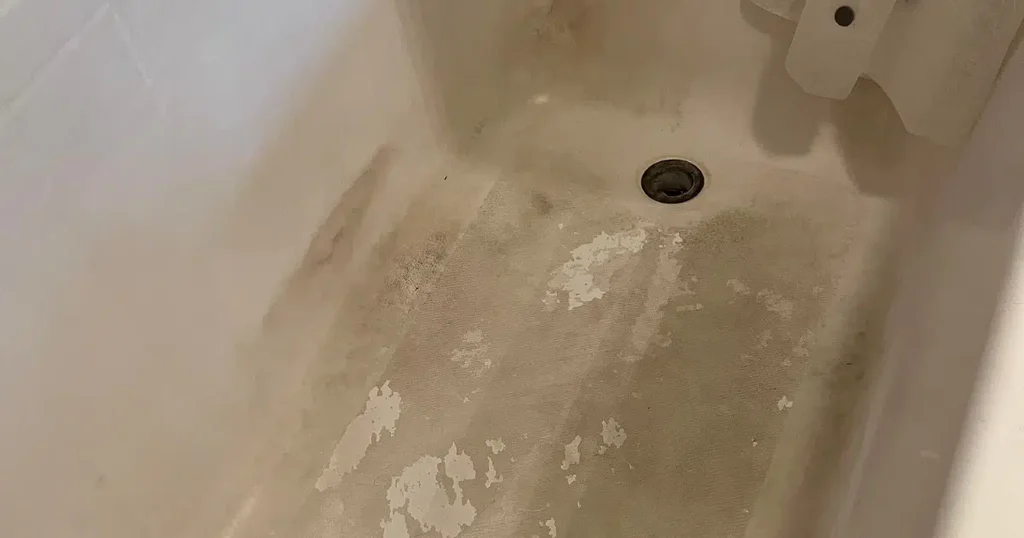
Some surface discoloration is normal over time, especially in areas with hard water like Arlington, TX. But when staining becomes permanent and no longer responds to gentle cleaning, it is a sign that the coating has been compromised. The surface is no longer smooth and nonporous, which means it is absorbing stains rather than repelling them.
This type of discoloration is often caused by prolonged exposure to harsh cleaners that have dulled and opened up the surface, by UV exposure in bathrooms with windows, or by the natural aging of a lower-quality coating material.
Types of Discoloration That Signal Coating Breakdown
- Yellow or brown staining concentrated around the drain or waterline that does not respond to cleaning
- Gray or cloudy patches across the surface where the coating has lost its original gloss
- Uneven color patches where certain areas appear lighter or darker than the rest of the tub
Rough or Dull Texture
A properly refinished bathtub surface should feel smooth and consistent to the touch. When the coating begins to break down, the texture changes. The surface may feel rough, gritty, or uneven in areas where it was once completely smooth. The glossy finish dulls and takes on a flat or chalky appearance.
This is a common sign in tubs where abrasive cleaners or scrubbing pads have been used regularly. Each cleaning session removes a thin layer of the coating until the surface becomes noticeably rough. Once the texture has changed in this way, the coating is no longer providing full protection to the tub underneath.
Signs of Texture and Finish Breakdown to Inspect For
- Run a clean dry hand across the surface and feel for rough or gritty areas that contrast with smoother sections
- Inspect the surface under natural or bright light for dull, flat, or chalky patches that indicate coating wear
- Compare the current appearance to photos taken shortly after the original refinishing job if available
According to the overview of signs of bathtub surface wear covered by Bob Vila, changes in surface texture and gloss are among the earliest reliable indicators that a refinished coating is beginning to break down and may need professional attention.
Cracks and Chips in the Coating
Small chips and surface cracks in a refinished tub are not just cosmetic issues. Every chip or crack is an entry point for water. Once water gets underneath the coating, it spreads laterally and causes the surrounding area to lift and peel. What starts as a chip the size of a fingernail can become a large peeling section within months if left unaddressed.
Surface cracks are different from structural cracks. A surface crack is limited to the coating layer itself. A structural crack goes through the tub body and is a sign of a more serious underlying issue that refinishing alone cannot address.
How to Tell Surface Cracks From Structural Damage
- Surface cracks appear only in the coating layer and do not flex or move when pressure is applied
- Structural cracks may feel slightly soft or flexible and often run in a consistent line across a larger area
- When in doubt, have a technician inspect and confirm before deciding on the right course of action
Soft Spots and Hollow Sections
Pressing lightly on the tub surface and feeling a soft or hollow area is a sign that the coating has separated from the tub beneath it without yet peeling visibly. The coating is still in place but is no longer bonded. These areas are particularly vulnerable because the unsupported coating cracks easily under normal use.
Soft spots are often found near the drain, along the floor of the tub where standing water collects, and in corners where moisture tends to accumulate. They are easy to miss without a deliberate inspection, which is why checking the surface regularly matters.
Where to Inspect Most Carefully for Soft Spots
- Press gently along the floor of the tub near the drain and in the corners where moisture tends to sit
- Check along the waterline and any areas where caulk meets the tub surface for early separation
- Inspect areas that have previously been chipped or addressed, as these spots are more vulnerable to soft spot development
For a complete step-by-step routine that helps you avoid these problems from developing in the first place, How to Take Care of a Refinished Bathtub the Right Way walks you through the daily and weekly habits that protect your coating long term.
Caulk Separation and Edge Lifting
The caulk line around the perimeter of your bathtub plays a critical role in protecting the refinished surface. When caulk separates from the tub edge, water gets into the gap and travels underneath the coating along the entire perimeter. This type of water intrusion is one of the leading causes of widespread edge peeling.
Caulk naturally ages and shrinks over time. Mold or mildew growing along the caulk line, visible gaps between the caulk and the tub surface, and caulk that has turned yellow or brittle are all signs that re-caulking is needed before water damage sets in.
Signs That Your Tub Caulk Needs Immediate Attention
- Visible gaps or separation between the caulk bead and the tub surface along any part of the perimeter
- Mold or mildew growing along or underneath the caulk line that cannot be cleaned away
- Caulk that has become brittle, cracked, or discolored and is no longer flexible or sealing properly
According to the sustainable management of construction and demolition materials guidelines from the U.S. Environmental Protection Agency, addressing early signs of surface deterioration in bathroom fixtures is a practical and cost-effective way to extend the life of existing materials and avoid unnecessary replacement.
What to Do When You Spot These Warning Signs
Catching warning signs early is only valuable if you act on them. The longer any of these issues are left unaddressed, the more the damage spreads and the more involved the next refinishing job becomes. A small peeling edge addressed early is a minor touch-up. The same issue ignored for six months may require a full strip and re-coat. This is true for both tub surfaces and bathroom vanity refinishing, where early intervention always leads to a faster and more affordable repair.
Steps to Take When Your Refinished Tub Shows Warning Signs
- Stop using abrasive cleaners or scrubbing tools on the affected area immediately
- Keep the damaged area as dry as possible to slow the spread of any moisture intrusion
- Contact a professional refinishing technician for an assessment as soon as possible
- Avoid using DIY sealants or household products to cover the damage before a professional inspection
If you are also weighing whether it makes more sense to refinish again or consider a full replacement at this stage, Is Bathtub Refinishing Worth It? What Homeowners Should Know walks you through exactly what to consider before making that call.
Do Not Wait Until the Damage Spreads
The warning signs covered in this guide are all manageable when caught early. Peeling, bubbling, discoloration, rough texture, chips, soft spots, and caulk separation are each telling you the same thing: the coating needs professional attention before the situation gets worse.
Homeowners who stay on top of regular surface inspections and act at the first sign of trouble almost always avoid the most costly outcomes. A quick professional assessment costs far less than a full refinishing job that could have been prevented. If you are in the Arlington, TX area and your tub is showing any of these signs, Fort Worth Refinishing is ready to take a look and give you an honest recommendation. Contact us today or give us a call to schedule an assessment and find out exactly what your tub needs.
Frequently Asked Questions
Is it safe to keep using a bathtub that is peeling?
It is not recommended. Peeling coating can expose the underlying surface to moisture damage, and the loose pieces can become a slip or skin irritation concern. Have a technician assess the tub as soon as possible.
Can a heavily peeling bathtub be refinished again without stripping the old coating?
In most cases, no. When peeling is widespread, the old coating needs to be fully stripped before a new one can be applied properly. Applying a new coat over failing material will not hold up.
Does a dull finish always mean the coating is failing?
Not always. Some dulling is a natural result of regular use over time. However, if the dullness is accompanied by rough texture, staining, or soft spots, it is a sign that the coating is breaking down and needs professional attention.
How long can I wait after noticing a chip before having it addressed?
The sooner the better. Even a small chip should be addressed within a few weeks of being noticed. The longer water has access to the area underneath the coating, the more the surrounding finish is at risk.
Can mold growing under the caulk line damage the refinished surface?
Yes. Mold growth under the caulk line indicates moisture is already getting behind the coating along the perimeter. Left unaddressed, this leads to edge lifting and peeling across a larger section of the tub.
What is the difference between a surface crack and a structural crack in a refinished tub?
A surface crack is limited to the coating layer and does not affect the tub body underneath. A structural crack goes through the tub material itself and is a sign of a more serious problem that refinishing alone cannot resolve.
Will a soft spot always turn into a full peel if left alone?
In most cases, yes. A soft spot means the coating has already separated from the surface below it. Without intervention, regular use and moisture exposure will cause that area to crack and peel over time.
Is bubbling on a refinished tub always caused by moisture?
Moisture is the most common cause, but trapped air during the original application can also cause bubbling. Either way, the coating bond has been compromised and the area needs professional assessment.
Can I use a sealant from a hardware store to temporarily stop a peeling area from spreading?
It is not recommended. Household sealants are not compatible with refinishing coatings and can make the professional repair more difficult. Keeping the area dry and contacting a technician is the better approach.